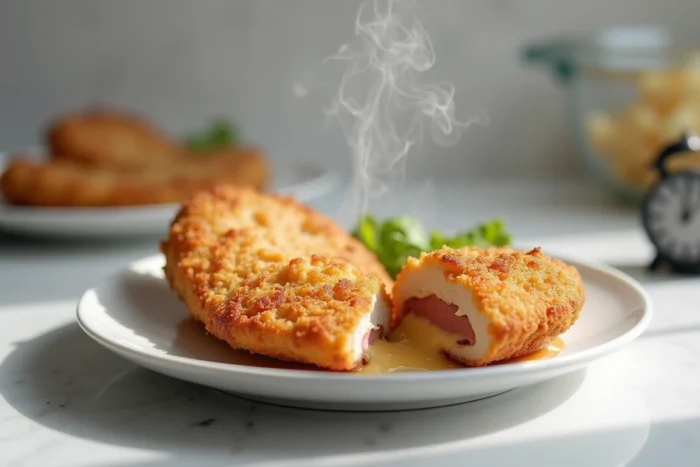
We come home late, the fridge only offers a pack of frozen cordon bleus, and all we want is to eat quickly. The microwave seems like the obvious solution, but the usual result is disappointing: soggy coating, cheese oozing out, center still lukewarm. Successfully cooking a cordon bleu in the microwave requires some precise adjustments that most packaging does not detail.
Why does the cordon bleu become soggy in the microwave (and not in the oven)
The microwave heats by agitating the water molecules contained in the food. The coating, designed to become crispy through contact with hot fat or dry air, is here exposed to steam produced by the cheese and ham inside. The internal steam rises and saturates the coating, which becomes rubbery instead of browning.
With a frozen industrial cordon bleu, the problem worsens: the frost melts and generates even more moisture. Health authorities also report the difficulty of achieving even cooking in the microwave for frozen breaded poultry products. Some organizations recommend not relying on the microwave as the primary cooking method, unless the manufacturer explicitly states so on the packaging.
We thus have two distinct problems to solve: texture (crispy coating) and safety (cooked through). Mastering the cooking of the cordon bleu in the microwave involves managing these two parameters simultaneously.
Power setting and cooking time for a cordon bleu in the microwave
The temptation is to push the power to the maximum to go fast. This is exactly what produces a cordon bleu that is burning on the edges and cold in the center. A better result is achieved by reducing the power and slightly extending the time.
Already defrosted cordon bleu
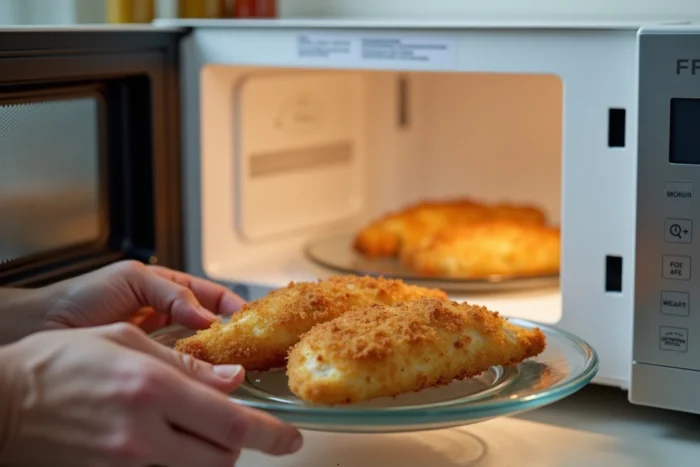
For a cordon bleu taken out of the refrigerator (defrosted the day before or fresh), place it on a microwave-safe plate covered with a paper towel. The paper absorbs some of the moisture released during cooking and limits the softening of the coating from underneath.
Set the microwave to medium-high power. The time varies depending on the thickness of the cordon bleu and the actual power of the device. Feedback varies on this point, but a good guideline is to start with a short time, check the temperature in the center, and restart in increments of a few seconds if the cheese has not melted.
Frozen cordon bleu without defrosting
The direct transition from the freezer to the microwave complicates matters. The frost adds water, and the center takes longer to reach a sufficient temperature. The most reliable method is to first use the defrost function of the device, then follow with cooking at moderate power. Skipping the defrosting step results in an unevenly cooked cordon bleu, with a risk of cold spots in the center.
Achieving a crispy coating without a pan or oven
This is the weak point of a conventional microwave. Several approaches can help compensate for the lack of dry heat.
- The crisp plate (or microwave grill): some combined microwaves come with a special metal plate that heats from below. Preheat the plate, place the cordon bleu on it, and the contact heat partially reproduces the effect of a pan. This method provides the best crispiness without taking out a pot.
- The double cooking method: first cook the cordon bleu in the microwave to melt the cheese inside, then briefly transfer it to a hot pan with a drizzle of oil. This hybrid technique is increasingly recommended for frozen breaded products, not just for cordon bleus.
- The paper towel underneath and above: if you have neither a crisp plate nor a pan, placing paper towels under and over the cordon bleu limits the ambient moisture. The result remains less crispy than in the oven, but the coating no longer sticks to the plate.
For a homemade cordon bleu (and not industrial), the coating plays a crucial role. A classic fine breadcrumb softens very quickly in the microwave. Using Panko breadcrumbs, which are airier and lighter, limits softening because it absorbs less moisture. Roll the cordon bleu tightly and let it rest in the cold before cooking so that the cheese stays in the center and does not ooze out during the microwave process.
Common mistakes that ruin the cordon bleu in the microwave
Some habits seem logical but produce the opposite effect of what we seek.
Covering the cordon bleu with a microwave lid or plastic wrap traps all the steam. The result: a soggy coating and a cordon bleu swimming in its juices. Leave the plate uncovered to allow the steam to escape.
Stacking two cordon bleus on top of each other to save time prevents heat from penetrating evenly. Cook one cordon bleu at a time, or space them sufficiently on the plate so that the waves circulate around each piece.
Not flipping the cordon bleu halfway through cooking is another common mistake. The underside, in contact with the plate, receives less direct heat. Flipping it halfway balances the cooking and improves the texture on both sides of the coating.
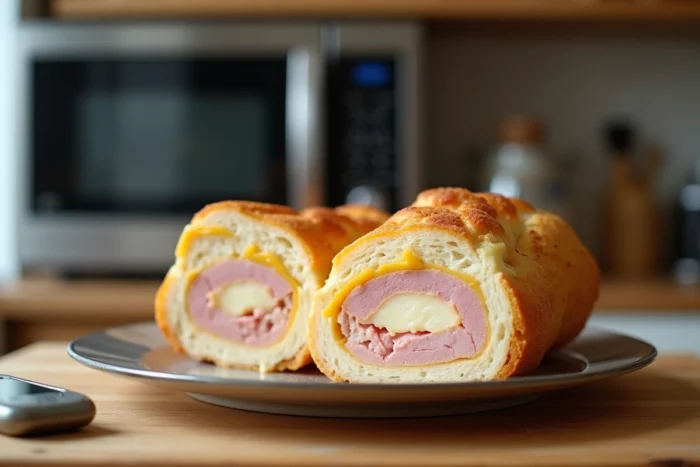
Homemade or industrial cordon bleu: the microwave does not forgive the same flaws
An industrial cordon bleu is designed for oven or pan cooking. The coating is calibrated to withstand dry heat, not steam. In the microwave, we are compensating for a product that was not designed for this use.
A homemade cordon bleu offers more leeway. You can adjust the thickness of the coating, choose a flour that absorbs less, add a drizzle of broth or light sauce in the microwave-safe dish to keep the chicken moist without drowning the breadcrumbs. This technique of adding liquid works because the steam generated by the broth cooks the meat faster, which reduces the total exposure time and limits the softening of the coating.
The microwave remains a compromise for the cordon bleu, not an ideal cooking method. The combination of microwave followed by a hot pan gives the result closest to traditional cooking while keeping the advantage of speed. For those who really only have a microwave, the crisp plate and Panko breadcrumbs make the difference between an edible cordon bleu and a soggy rectangle.