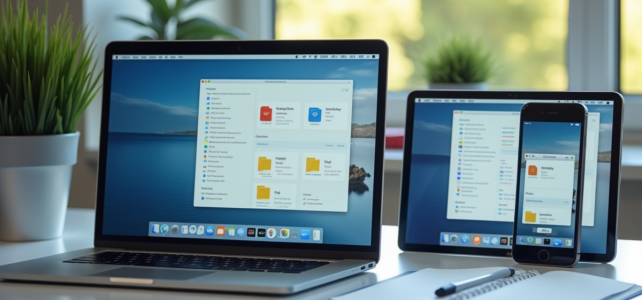
With the rise of remote work and distance collaborations, knowing how to use file-sharing platforms has become essential. These tools allow for storing, sharing, and collaborating on documents in real-time while ensuring data security.
To fully leverage these platforms, it’s important to be familiar with some practical tips. For example, organizing files into well-labeled folders makes searching easier. Setting access levels for different users can prevent errors and ensure that only authorized members can modify sensitive documents.
You may also like : How to Connect to Corporate Intranets: Practical Examples and Tips
Best Practices for Using File-Sharing Platforms
For optimal use of file-sharing platforms, a few essential practices are necessary. File sharing has become indispensable for collaboration in business, but it also presents notable risks regarding data security and information confidentiality.
Organization and Access
- Create well-labeled folders to facilitate navigation and searching.
- Define access levels for each user to protect sensitive documents.
- Use end-to-end encryption solutions to ensure the security of exchanges.
These measures not only help prevent human errors but also protect against data leaks and cyberattacks. They ensure better management of digital sovereignty.
Related reading : Learn to Convert Volumes in Cooking: Tips and Practical Examples
Training and Awareness
Employee training is a fundamental pillar of security. Ensure that every team member understands the best practices for file sharing and the implications for data protection. Platforms like fourtoutici.ac offer educational resources to master sharing tools.
Advanced Technologies and Tools
Solutions like Oodrive Work, which include access control and enhanced authentication features, allow for further securing exchanges. Activity tracking and the use of virtual data rooms are also assets for secure and efficient management of large files.
A combination of good organization, ongoing training, and advanced technologies is necessary to make the most of file-sharing platforms while minimizing associated risks.
Tools and Tips for Optimizing File Sharing
To get the most out of file-sharing platforms, certain tips and tools can significantly enhance your experience. End-to-end encryption solutions ensure that only authorized participants can access the exchanged information. This reduces the risks associated with data leaks and cyberattacks.
Access Control and Enhanced Authentication
Using access control and enhanced authentication systems limits access to sensitive documents. For example, Oodrive Work offers features that allow you to precisely define who can view, edit, or share each file. This granularity in permission management is fundamental for maintaining a high level of data confidentiality.
Activity Tracking and Virtual Data Rooms
Activity tracking allows you to trace actions taken on shared files, providing an overview of who accessed what and when. Virtual data rooms are an ideal solution for the secure sharing of large and sensitive documents, particularly in the financial and legal sectors.
Cloud Storage and Productivity
Cloud storage facilitates access to files from any device at any time. This flexibility enhances productivity and streamlines work processes. Ensure that your cloud provider complies with current security and privacy standards.
By applying these practices and using specialized tools, you can optimize file sharing while ensuring data security and information confidentiality.