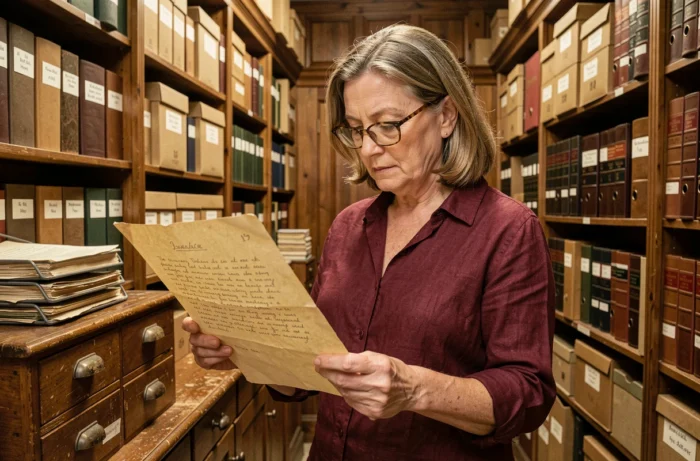
Every family has a shoebox filled with old photos, yellowed letters, or notarial deeds. These documents, often forgotten at the back of a closet, are archives. On a larger scale, archives gather all the documents produced by a person, a company, or an administration over the course of their activity. Their role goes far beyond nostalgia: they serve as legal evidence, a source for historical research, and a foundation for collective memory.
Digital Archives: Preserving Integrity When the Medium Disappears
A parchment from the Middle Ages remains legible to the naked eye after several centuries. A computer file created fifteen years ago can become inaccessible if the software that opened it no longer exists. This gap summarizes the central challenge of digital archiving.
Preserving an electronic document is not just about copying it to a hard drive. It is also necessary to keep its metadata (author, date, context of creation) and ensure that the format remains readable over time. Practically, this means monitoring formats and planning migrations before they become obsolete.
A simple example: an administrative report written in a word processor from the 2000s risks losing its formatting, or even its content, if no one converts it to a sustainable format. Preventive migration, carried out before the problem arises, is part of the daily routine for specialized archivists.
Resources like lesarchivistes.net help to better understand the skills and pathways related to these evolving professions.
Personal Data Protection and Archives: A Delicate Balance
Have you ever noticed that a medical file or an employment contract contains very personal information? When this type of document enters an archive collection, the question of access rights arises immediately.
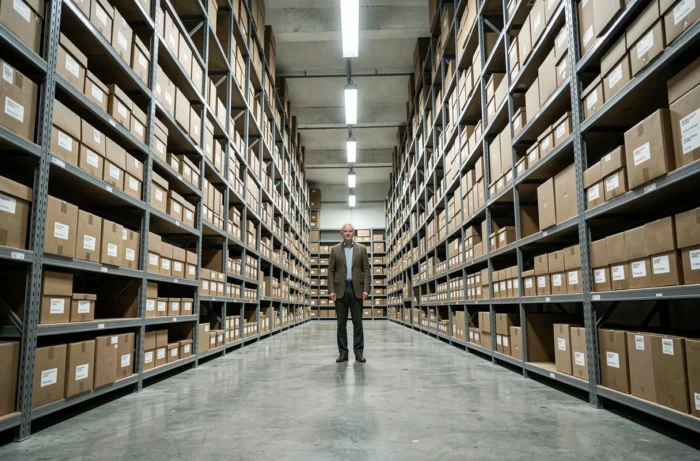
Regulations distinguish several phases in the life of a document. During the so-called “intermediate” phase, the document is no longer used daily but retains administrative or legal utility. The CNIL then recommends a separation of data, either physical or logical, to limit access to only authorized individuals.
In practice, this means that an agent of a local authority cannot freely consult an archived file without a specific reason. Access must be occasional and justified. This constraint protects the privacy of the individuals mentioned in the documents.
When archives become “definitive” (kept for their historical interest), other communication deadlines apply. Some documents are only accessible to the public after several decades, particularly those related to personal privacy or state security.
- Current archives are regularly used by the service that produced them.
- Intermediate archives are no longer used daily but retain legal or administrative value for a defined period.
- Definitive archives are kept indefinitely for their heritage or historical value.
Artificial Intelligence and Manuscript Collections: New Access Possibilities
Imagine a collection of correspondence from the 19th century: thousands of handwritten letters, difficult to read for a non-specialist. Until recently, only trained paleographers or historians could decipher and catalog them. This work took years.
Handwriting recognition tools are beginning to change the game. Combined with optical character recognition and named entity extraction (automatic identification of people, places, dates in a text), they allow for indexing large volumes of documents in a fraction of the time previously required.
However, these technologies do not replace human expertise. The quality of the results depends on the legibility of the originals, the language used, and the historical period. An algorithm that performs well on 18th-century French letters may fail with a medieval manuscript in abbreviated Latin. Human verification remains necessary to ensure the reliability of the produced data.

This project also requires new skills for archivists: understanding how the tools work, knowing how to configure a recognition model, and evaluating the relevance of the results. The archivist profession in 2026 incorporates a technical dimension that did not exist ten years ago.
Why Archives Matter for Research and Governance
Archives are not just for genealogy enthusiasts or academic historians. They play a concrete role in the functioning of institutions.
In terms of governance, an archived document can serve as evidence in a land dispute, an electoral challenge, or an administrative audit. Without reliable archives, there is no traceability of public decisions. The National Archives of France, located between Paris and Pierrefitte-sur-Seine, preserve public collections dating back to the 7th century.
For historical research, archives provide an irreplaceable raw material. Personal collections, such as those of Gisèle Halimi that entered the National Archives, document major political and social struggles: decolonization, feminism, evolution of law. These documents do not tell the “official” history but complement it with individual voices.
- A social history researcher can reconstruct the daily life of a community using civil registry records and municipal deliberations.
- A lawyer can trace the genesis of a law by consulting the preparatory works preserved in parliamentary collections.
- A genealogist can trace several generations by cross-referencing parish registers, notarial acts, and censuses.
The transformation of archival information systems remains a long-term institutional project. Remote access, still uneven across institutions and collections, presents a distinct challenge from digitization itself. Digitizing a document is not enough: it must also be described, contextualized, and made searchable in a search engine.
Archives are a discreet common good. Their value often only reveals itself when someone needs them, to prove a right, understand an era, or find a trace. The work of collecting, classifying, and preserving that makes this access possible relies on constantly evolving technical skills and societal choices that deserve to be better known.