
AI-powered health assistants are multiplying, but not all cover the same functional areas or regulatory frameworks. Your Health Assistant positions itself in the connected wellness niche with a conversational approach. What monitoring areas does it cover, what data does it utilize, and how does it compare to other market solutions?
AI Health Assistants: Compared Functional Areas
| Criteria | Your Health Assistant | Samsung Health Assistant | Amazon Health AI |
|---|---|---|---|
| Status | Available | Beta | Available (United States) |
| Main Interface | Web and mobile application | Integrated with Samsung Health | Website and Amazon app |
| Monitoring Areas | Overall wellness, lifestyle habits | Sleep, physical activity, nutrition, mindfulness, vital signs | Medical questions, analyses, prescriptions, appointments |
| Required Hardware | None (manufacturer-independent) | Galaxy devices (watch, ring) | One Medical subscription recommended |
| Regulatory Positioning | Wellness, no diagnosis | Wellness, no diagnosis | Referral to medical care |
This table highlights a structural gap. Samsung and Amazon base their assistants on existing hardware ecosystems or medical services. Your Health Assistant operates independently of any manufacturer, which broadens its potential user base but limits the physiological data it can collect on its own.
The presentation of Your Health Assistant details all the modules accessible from the interface, from nutritional tracking to personalized reminders.
Conversational Approach and Health Data Processing
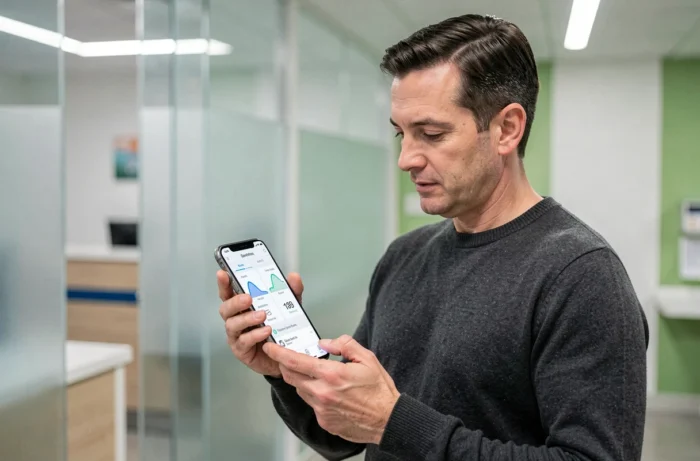
The uniqueness of Your Health Assistant lies in its conversational interface. Users ask questions in natural language about their habits, diet, or activity level. The assistant cross-references this information to formulate contextualized suggestions.
Samsung Health Assistant operates similarly but relies on the sensors of Galaxy devices to automatically enrich the data. Heart rate, sleep quality, or step count are recorded without user intervention. With Your Health Assistant, the data relies more on self-reporting, which requires active participation.
This difference is significant. An assistant fed by physiological sensors can detect correlations that the user may not perceive (for example, the link between fragmented sleep and decreased activity the next day). A self-reporting assistant depends on the regularity and accuracy of the entries.
Five Areas Covered by Conversational Assistants
- Sleep: duration, regularity, perceived quality upon waking
- Physical activity: type of exercise, frequency, perceived or measured intensity
- Nutrition: reported intake, meal balance, hydration
- Mental well-being: stress level, mindfulness exercises
- Vital signs: heart rate, oxygen saturation (if sensor available)
Your Health Assistant covers the first four areas without dedicated hardware. The fifth requires a compatible third-party connected device.
European Regulatory Framework: Wellness or Medical Device
The boundary between wellness assistant and medical software determines what a tool can legally claim. An assistant that helps understand personal trends does not have the same status as software guiding a diagnosis. The European regulation on medical devices classifies any software that influences a diagnostic or therapeutic decision as a “device.”
Your Health Assistant, like Samsung Health Assistant, explicitly positions itself on the side of wellness. Neither claims a role in the care pathway. Amazon Health AI takes a different stance: it allows users to make appointments with healthcare professionals, explain analysis results, and manage prescriptions, bringing it closer to the medical scope.
Transparency Obligations Related to the AI Act
The European AI Act introduces a transparency obligation for interactions with AI assistants. Specifically, the user must know that they are interacting with an artificial intelligence and not a human professional. For a health conversational assistant aimed at European users, this requirement entails a clear display of the tool’s non-medical status.
Your Health Assistant incorporates this logic into its interface by specifying the automated nature of the responses. This point, often overlooked in comparisons, constitutes a compliance criterion for any deployment in the European market.

Innovative Features of Your Health Assistant: What Sets It Apart
Beyond the common foundation of health assistants, several features deserve examination.
- Hardware independence: the app works on any smartphone, without a proprietary ecosystem. A user can switch from Android to iOS without losing their history
- Progressive personalization: the assistant refines its suggestions over time, identifying recurring habits and deviations from declared goals
- Modularity of monitoring areas: the user chooses the active modules (nutrition, sleep, activity) without being forced to use the entire platform
- Multilingual interface accessible on the web: no mandatory download for first use
The absence of hardware lock-in remains the main differentiating argument. In a market where Samsung limits its assistant to Galaxy devices and where Amazon conditions certain features on a subscription, this openness meets a concrete need for interoperability.
The assistant does not claim to replace medical monitoring. Its value lies in the ability to structure scattered wellness data and present it in a conversational format. For users who do not own a connected watch or Galaxy ring, it is a gateway to AI-assisted health tracking, without prior hardware investment.