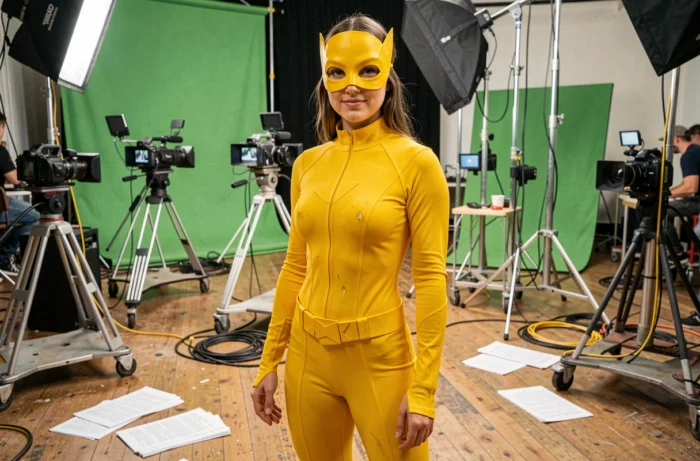
The Fantômette series, aired in 1993 on France 3 and Canal J, remains a curiosity in French youth fiction. Twenty-one episodes of twenty-four minutes, a shoot set in the North, a masked heroine adapted from the novels of Georges Chaulet: the project combined the technical constraints of a low-budget production with the narrative demands of a character from popular literature.
Shooting in Villeneuve-d’Ascq: real decor constraints for youth fiction
Villeneuve-d’Ascq offered a compact architectural diversity. Residential areas, green spaces, administrative buildings from the 1970s-1980s: the city allowed for the simulation of multiple environments without requiring extensive team relocations, a direct asset for a production with limited resources.
Shooting in a real setting in an active municipality imposes heavy constraints. Municipal authorizations, informing local residents, managing traffic and pedestrians. The budget did not allow for entire streets to be blocked as a film production might do. The natural light of the North, often changeable, added a variable that was difficult to control.
The set designers worked through discreet additions: fictional signage, facade accessories, repositioned vehicles to hide elements inconsistent with the world of Fantômette. The goal was to create a fictional city generic enough to align with the novels of Georges Chaulet. Dressing the real rather than building the fake, a common method in French productions of the 1990s.
A comprehensive overview of the character’s adaptations, including the films with Fantômette on Séries Animés, allows us to gauge how this television series remains the most accomplished attempt in live-action.
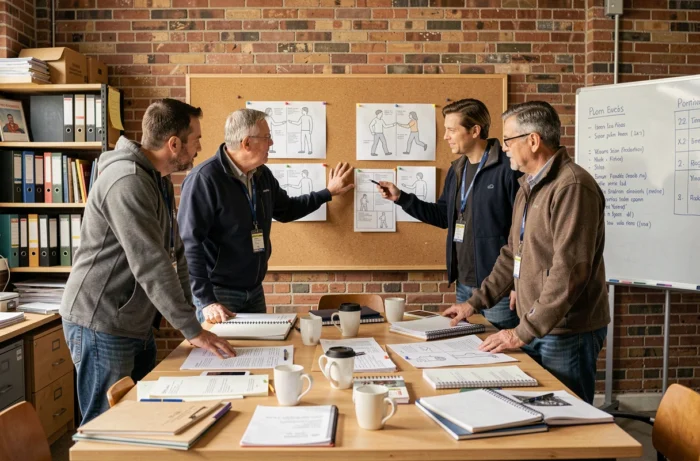
Youth casting and legal constraints of the Fantômette series
Katia Sourzac in the title role, Justine Fraioli among the recurring characters: the casting relied on young actresses. French legislation strictly regulates the work of minors on set. Limited working hours, mandatory presence of a guardian, specific arrangements for physically demanding scenes.
Each action scene had to be choreographed with the actresses’ ages in mind. Chases, climbs, confrontations: the stunts visible on screen remained modest compared to Anglo-Saxon standards. Their preparation took an inordinate amount of time compared to their final duration in editing.
The production pace suffered directly. Twenty-one episodes filmed with time constraints related to the presence of minors on set required anticipating school periods and respecting mandatory rest times. Organizing the work plan became a logistical exercise in its own right.
Adapting Georges Chaulet’s Fantômette novels into twenty-four-minute episodes
The material was abundant. The difficulty lay in the transposition. Translating the tone of the novels into images without slipping into unintentional parody required precise calibration of the tone.
- The character navigates between two identities, which necessitates frequent costume changes and rigorous continuity work between shots.
- The antagonists in the novels are often caricatured: on screen, the performances of adult actors had to remain credible without betraying the quirky spirit of the original literature.
The transition from novel to screen condensed the plots into standalone episodes. Each episode had to present a problem, develop the investigation, and resolve the mystery in a short format, whereas the novels could stretch the tension over several chapters. The production had a limited geographical perimeter around Villeneuve-d’Ascq, which restricted the variety of urban settings implied by the original adventures.
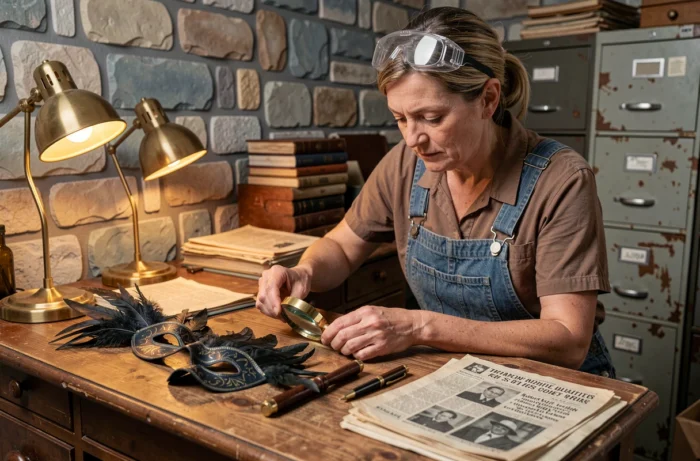
Airing on France 3 and Canal J: reception of a masked heroine in 1993
The series was scheduled between April and May 1993, a narrow window that did not allow time to build a large audience. France 3 positioned Fantômette in its youth slots, facing the Japanese and American animated series that dominated the schedules at the time.
Fantômette carried a unique message for youth fiction of this period. The heroine acted alone, took risks, and conducted her investigations without adult supervision, a positioning directly inherited from Chaulet’s novels. This trait distinguished her from competing productions where female characters occupied secondary roles.
The series was not renewed. The reasons likely stem from a combination of the cost of producing in real settings, constraints related to young casting, and insufficient audiences compared to imported animation. Fantômette remains the only live-action adaptation of Chaulet’s work to have achieved national broadcast, a status that time has only reinforced.